Six Lines, One Pencil: The Quiet Confidence of a West Country Pub Menu Board
Photo: PattayaPatrol, CC BY-SA 4.0, via Wikimedia Commons
There is a particular sort of West Country pub where the menu is not a document. It is a board by the door, a sheet on the bar, or a line of chalk that has been smudged by somebody leaning past it to reach the salt. You order a pint, look up, and read six lines. Maybe seven. One of them has been crossed out. That is usually a good sign.
A chalkboard menu is not a gimmick. It is a small, public admission that a kitchen is cooking for today rather than defending a laminated idea of itself. In a region with proper markets, boats, gardens, farms and a long memory of feeding people without fuss, the board is often the most honest thing in the room.
The board is a promise, not a brochure
A printed menu has to be right for months. A chalkboard only has to be right for lunch. That difference matters. When a pub writes its menu by hand each morning, it can respond to what the butcher actually had, what the fishmonger brought in, what is glutting in the garden and what the kitchen has time to cook properly.
This is why a short board so often signals better cooking. Six dishes can be prepped with care. Thirty dishes usually mean somebody has been busy opening bags. That is not a moral judgement about every pub with a long menu — some do it very well — but a board with crossings out and a narrow list is giving you a clue about how the kitchen spends its morning.
The language gives it away, too. Look for verbs rather than adjectives: braised, grilled, cured, pickled, roasted. Look for provenance that sounds like a person rather than a logo: our garden, the farm down the lane, the boat at the harbour, the baker in the next village. You do not need a full biography of every carrot. You just want the sense that somebody knows where it came from.
How to read it without overthinking
Start at the top. Is there a date? A day? A small note saying until we run out? These are good signs. A board that changes is a board worth trusting. A board that has said the same thing since the spring is probably decoration.
Then look at what is missing. If the pie has gone by half past one, that tells you more than a paragraph of menu prose. If the fish is off, ask what came in instead. If there is only one pudding left, order it. A kitchen that runs out is a kitchen that cooks to demand rather than reheating to a rota.
Read the prices as part of the story. A short board is not automatically expensive, and a long one is not automatically cheap. But a board with six well-chosen things often lands better value than a menu with thirty compromises. You are paying for a kitchen that has made decisions.
And ask. Not in a quizmaster way — just ask what is good. The answer will tell you plenty. If the person behind the bar says the soup was made this morning and the bread came from the village bakery, that is the meal. If they say everything is lovely, you are on your own.
Six things done properly
The arithmetic of a small pub kitchen is brutal. One oven, two hands, a narrow fridge and a lunch service that arrives all at once. A board of six dishes is not a limitation; it is a plan. It means the cook can make the sauce properly, pick the greens properly, and still have time to speak to the people eating.
This is especially true in the West Country, where the best pub food often sits close to a single idea: something from the sea, something from the field, something from the garden, and a pudding that does not need a pastry chef. A board that offers a good soup, a proper sandwich, one fish, one pie, one vegetarian dish and a plate of cheese is not short of ambition. It is short of nonsense.
When a pub trusts the board, the kitchen has nothing to hide behind. There is no glossy photograph of a dish that was never going to look like that. There is no section called something vague and hopeful. There is just a list, a pencil and the day’s work. That is a more exposed way to run a kitchen, and often a better one.
When it is down to two puddings
Two puddings is not a crisis. It is a decision. Ask which one was made today. Ask which one is warm. If both are cold, ask which one comes with cream. If neither comes with cream, ask whether there is custard. These are not difficult questions, and they are much more useful than staring at the board as if it might grow a third option.
Generally, choose the pudding with fruit in season. Choose the one that sounds like it was made in a domestic kitchen rather than a factory. Choose the warm one if the weather is doing what West Country weather usually does. And if you are still torn, order one of each and share. A pub that has only two puddings left is a pub that has been busy. You are not there to punish it for that.
The tell-tale signs
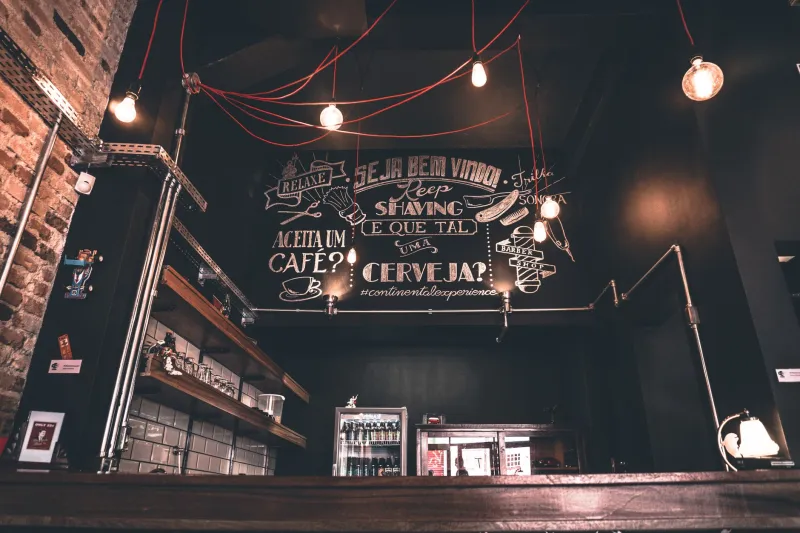
Good boards are rarely tidy. They have smudges, arrows, a line through the sold-out dish and a note at the bottom about allergens. They might be a single sheet printed that morning, a spoken list by the bar, or a proper blackboard propped on a chair. The format matters less than the freshness.
Be wary of a board that is really a second printed menu, with the same specials in the same handwriting for months. Be wary of a list so long that nobody could cook it from scratch in a normal pub kitchen. And be wary of any board that makes you feel you need to decode it rather than simply ask what is good.
The best West Country boards are found in the pubs with the fewest tables, the shortest walk from the bar to the kitchen, and a cook who looks as if they have been up since six. You will find them in Devon and Cornwall, Somerset and Dorset, Wiltshire and Gloucestershire, and in the smaller places between. They are not trying to impress you with choice. They are trying to feed you well.
That is the quiet confidence of a chalkboard. It does not promise everything. It promises today. Order the thing that is about to run out, ask about the pudding, and trust the pencil.